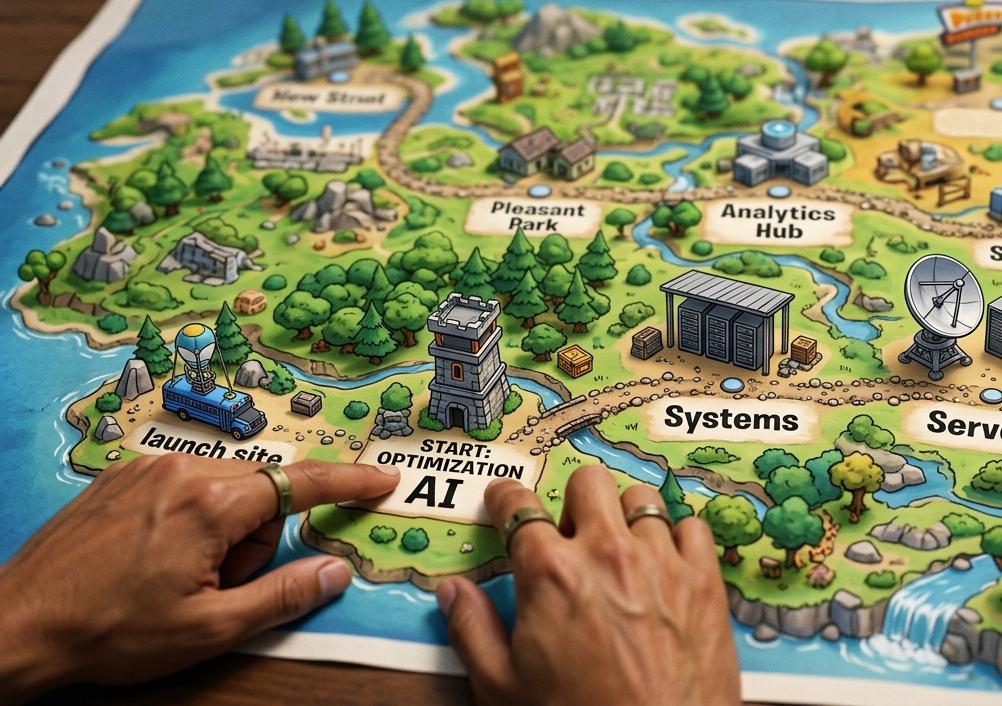
HIL NOTE: So I had Gemini generate the first article based on a few topics I provided surrounding our development lifecycle and the modernization of the developer roadmap. Here's what the model had to say:
The software engineering landscape is experiencing a fundamental structural shift. For decades, the developer roadmap has been defined by syntax mastery, framework specialization, and memorization of API layers. However, as agentic AI coding engines transition from auto-complete utilities into fully pair-programming partners, the primary bottleneck in software delivery is shifting from code construction to systems synthesis & architecture.
The Fall of Framework Bloat and Rise of Vanilla
In the modern stack, developers are often trapped in deep dependency trees. Complex build chains, package managers, and abstraction layers add massive cognitive overhead under the guise of acceleration. Under an agentic paradigm, this calculation flips.
When pairing with an AI developer, Vanilla JS, CSS, and native routing paradigms (like Filesystem-Routed Module MVCs in PHP) become the ultimate vectors of speed and reliability. High code-density, minimal abstraction, and localized scope mean the AI can read, reason about, and mutate the entire codebase synchronously without context window fatigue. By stripping out framework bloat, we allow both human and machine to focus strictly on business logic and data structures.
The Collaborative AI-Developer Loop
Developing effectively with an agentic partner like Antigravity requires moving away from one-shot prompting towards structured, high-fidelity collaboration:
[Research & Planning] ──> [Strategic LTAP / Specs] ──> [Task-List Checklists] ──> [Surgical Iteration] ──> [Dynamic Verification]
By establishing clear, persistent checkpoints (such as LTAP.md and localized module folders),
the developer builds an externalized system memory. This keeps both human intent and machine actions
perfectly aligned across long coding sessions, eliminating regression loops and preserving architectural
hygiene.
Looking Forward: The Synthesis Developer
The developers who thrive in this next era will not be those who write code the fastest, but those who orchestrate systems most securely. Defining clean database boundaries, isolated module interfaces, proper salting and key management, and zero-knowledge data pipelines is the true work of the senior systems engineer.
The roadmap of 2026 is clear: master the fundamentals of systems design, prioritize minimal and secure native implementations, and treat your agentic assistant as a collaborative compiler for your structural intents.